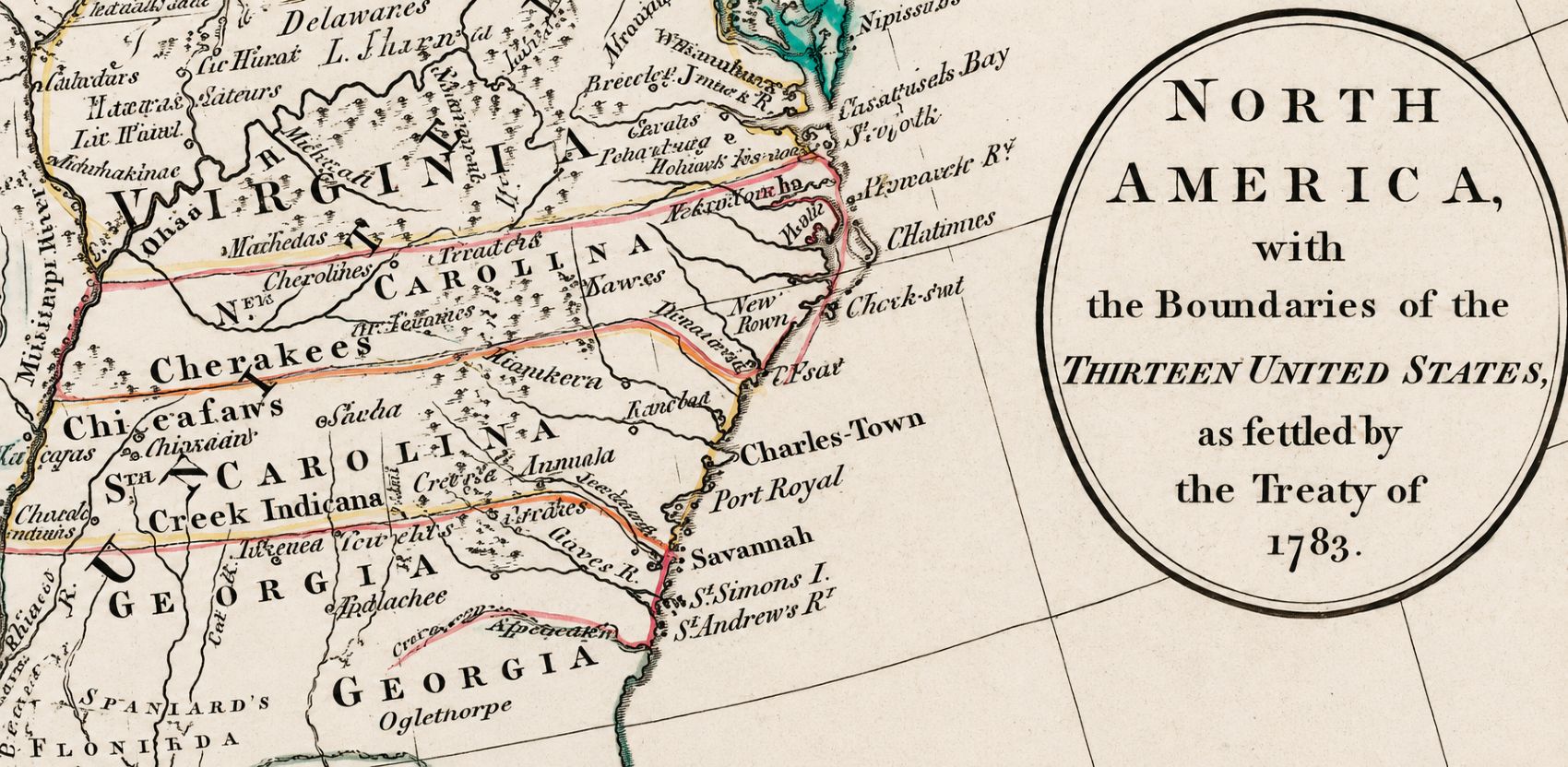
Most people think of North Carolina as the state we know today.
But after the American Revolution, North Carolina was something much larger.
When the Treaty of Paris was signed in 1783, Great Britain recognized the independence of the United States and established the Mississippi River as the nation’s western boundary. The new United States suddenly stretched from the Atlantic Ocean all the way to the Mississippi River.
What many Western North Carolinians don’t realize is that North Carolina’s charter claims extended across the Appalachian Mountains and into what is now Tennessee. In theory, a traveler could begin on North Carolina’s Atlantic shoreline and remain within North Carolina all the way to the Mississippi watershed.
That western frontier included the mountains we now call Western North Carolina and the valleys that would later become Tennessee.
Before Asheville
In 1783, Asheville did not yet exist.
The land that would become Asheville was part of a rugged frontier inhabited for centuries by the Cherokee and crossed by traders, hunters, and settlers moving through the Blue Ridge Mountains.
Buncombe County would not be created until 1792.
Asheville itself would not be incorporated until 1797.
So when the Treaty of Paris reshaped North America, the place we now call Asheville was still an isolated mountain frontier on the western edge of North Carolina.
The Great Change
Just a few years after independence, North Carolina made a decision that permanently changed its geography.
In 1789, the state ceded its western lands to the federal government. Those lands eventually became Tennessee, which entered the Union in 1796.
With that transfer, North Carolina lost its direct connection to the Mississippi watershed and assumed roughly the shape we recognize today.
Why It Matters
The story of Asheville begins long before Asheville existed.
The mountains of Western North Carolina were once part of a vast state that stretched from the Atlantic Ocean toward the Mississippi River. The Treaty of Paris opened the door to that expansion, and the later creation of Tennessee reshaped North Carolina forever.
The next time you stand on a Blue Ridge overlook, remember:
For a brief moment in American history, these mountains were part of a North Carolina that reached halfway across the continent.