For generations, the story of Asheville has been closely tied to the rails that carved their way through the Blue Ridge Mountains. From the grandeur of the Gilded Age to the promise of modern passenger travel, rail service has played a vital role in shaping the region’s economy, culture, and connectivity. Today, as Western North Carolina rebuilds and reimagines its future, the return of passenger rail is once again on the horizon.
All Aboard: The Past, Present, and Future of Rail Service in Asheville and Western North Carolina
The Past: Rails That Built a Legacy
The origins of rail service in Asheville date back to the late 19th century. Many historians believe the Vanderbilt family played a pivotal role in its expansion. When George Vanderbilt began constructing the Biltmore Estate in the 1880s, railroads were essential for transporting both materials and skilled labor into the mountains. Freight trains delivered everything from Indiana limestone to furnishings, while passenger service brought visitors eager to experience Asheville’s natural beauty and growing reputation as a mountain retreat.
The arrival of the Western North Carolina Railroad transformed Asheville into a thriving hub for commerce and tourism. Hotels, businesses, and entire communities flourished thanks to the connectivity provided by the rail lines. For decades, trains carried both goods and travelers, firmly establishing Asheville as a gateway to the Blue Ridge Mountains.
The Transition: Passenger Rail Fades, Freight Remains
As automobiles and highways became dominant in the mid-20th century, passenger rail service gradually declined. Like many cities across the United States, Asheville saw its passenger trains disappear. However, freight rail endured, continuing to support regional industries and supply chains throughout Western North Carolina.
For years, freight trains quietly served the region, ensuring the movement of goods while preserving the historic rail infrastructure that once connected Asheville to the rest of the nation.
The Present: Rebuilding After Hurricane Helene
In 2024, Hurricane Helene dramatically altered the landscape of Western North Carolina, damaging critical infrastructure—including freight rail lines. The storm disrupted supply chains and highlighted the importance of resilient transportation systems in the mountains.
Today, rebuilding efforts are underway. Rail operators and state agencies are working to restore freight service, recognizing its essential role in economic recovery. The reconstruction presents a rare and timely opportunity: to modernize infrastructure with an eye toward future passenger rail expansion.
As Asheville continues to recover and grow, the rails are poised to play a transformative role once again.
The Future: Amtrak Sets Its Sights on Asheville
Momentum is building for the long-anticipated return of passenger rail. Amtrak has identified Asheville as a priority in its expansion plans, with proposed service connecting the city to major hubs such as Salisbury, Charlotte, Raleigh, and beyond.
The most likely location for a future station is near Biltmore Village—a historically significant area that once welcomed rail passengers during the Vanderbilt era. Reestablishing service here would honor Asheville’s past while supporting its future as a regional economic and tourism powerhouse.
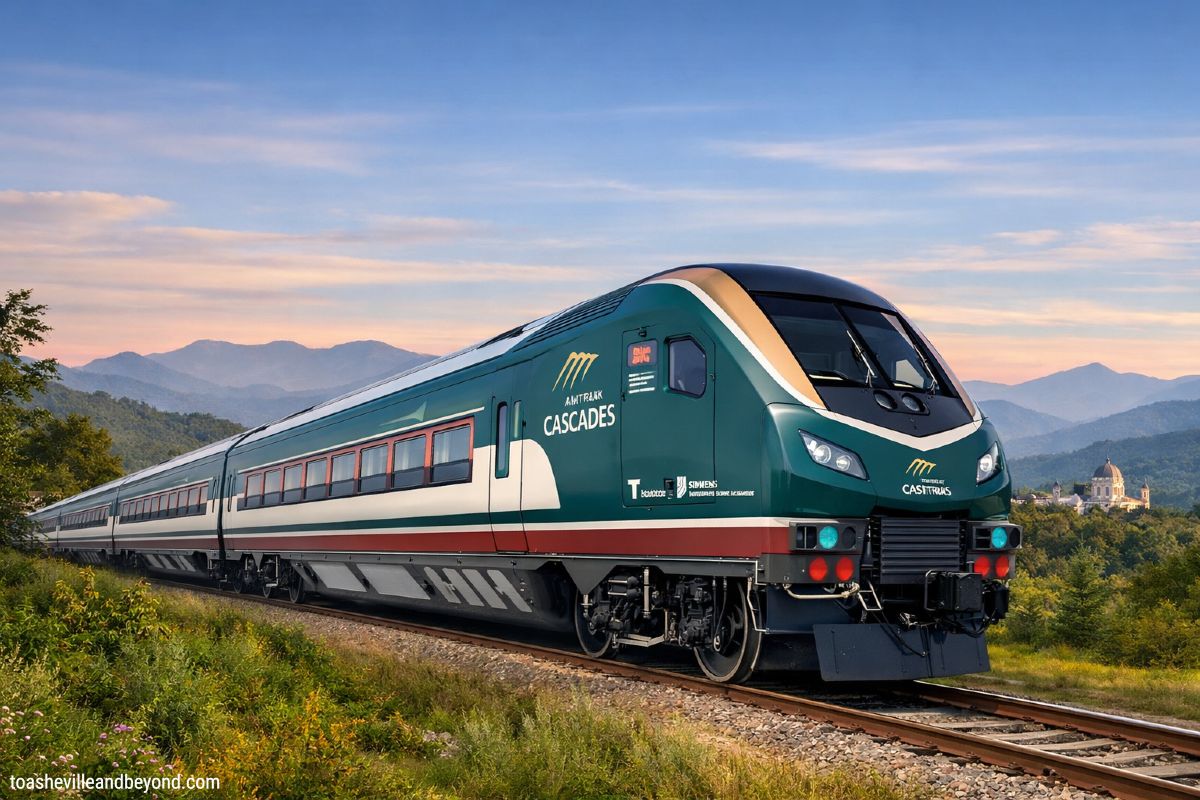
By the end of the decade, Asheville could welcome an upgraded version of the innovative Amtrak Airo passenger train. Designed for efficiency, comfort, and sustainability, the Airo represents the next generation of American rail travel. With modern amenities, reduced emissions, and seamless regional connectivity, it is a fitting symbol of Asheville’s forward-looking vision. If timelines align, passenger service could arrive as early as 2030.
Economic and Cultural Impact
The return of passenger rail would be transformative for Asheville and Western North Carolina. Key benefits include:
- Tourism Growth: Easier access for visitors traveling from major metropolitan areas.
- Economic Development: Increased investment and business opportunities along the rail corridor.
- Sustainable Transportation: A greener alternative that reduces congestion and emissions.
- Regional Connectivity: Improved mobility for residents, students, and professionals.
- Disaster Resilience: Diversified transportation infrastructure to support recovery and growth.
Asheville’s reputation as a destination for arts, culture, and outdoor adventure makes it an ideal candidate for modern passenger rail service.
Full Circle: From the Vanderbilts to the Airo
From delivering materials to build the Biltmore Estate to potentially welcoming cutting-edge Amtrak trains, Asheville’s rail story is one of resilience and reinvention. The region now stands at a pivotal moment in its history.
With freight service rebuilding after Hurricane Helene and Amtrak’s expansion on the horizon, the stage is set for a new era of connectivity. Asheville’s railways are no longer just relics of the past—they are pathways to the future.
If all goes according to plan, the sound of a passenger train pulling into Asheville may once again echo through the Blue Ridge Mountains by 2030.
All aboard—the future of rail in Western North Carolina is just around the bend.

Ready to Build the Future — Not Just Talk About It?
As Asheville and Western North Carolina prepare for a new era of connectivity, revitalization, and economic opportunity, visionary leaders are stepping forward to shape what comes next.
Are you one of them?
We partner with forward-thinking CEOs, developers, investors, and entrepreneurs who recognize that transformative moments—like the return of passenger rail—demand bold strategy and intelligent execution. From digital storytelling and regional branding to community-driven marketing systems, we help position businesses at the forefront of growth.
No fluff. No outdated tactics. Just modern, data-driven solutions that deliver real visibility, meaningful engagement, and measurable ROI.
If your vision aligns with the future of Asheville, now is the time to act.
Fill out the form.
Let’s build smarter.