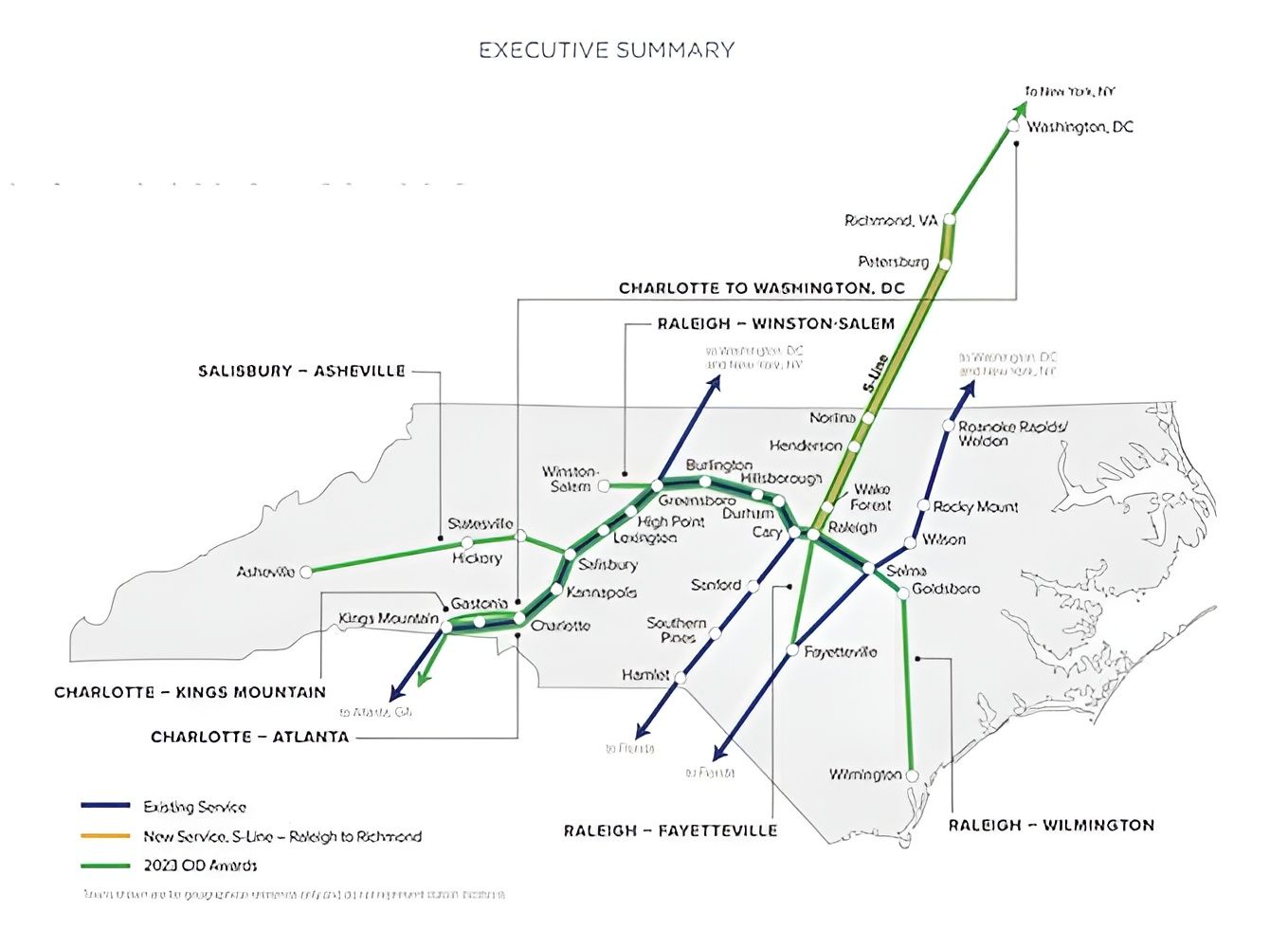
Asheville may be known for craft brews and mountain views, but there’s a new kind of momentum rolling into Western North Carolina — one with steel tracks, Amtrak promises, and the potential to redefine how people travel, work, and explore our region.
A Line That Once Connected a Region — And Could Do So Again
Passenger rail service between Asheville and Salisbury — a corridor that closed back in 1975 — has long been part of North Carolina’s transportation story. Now, after decades of feasibility studies and planning, the North Carolina Department of Transportation (NCDOT) says restoring this line could reconnect Asheville to major population centers like Charlotte, Raleigh, the Piedmont Triad, and the Research Triangle, while also serving our scenic mountain communities.
This isn’t nostalgia. It’s a strategic transportation revival with serious economic and social potential.
Economic Powerhouse on Rails
According to the latest Western NC Rail Corridor Economic Impact Report, building and operating passenger rail here could be huge:
🚆 $1.05 billion in economic output during construction
💰 $66.9 million in annual economic output once in service
👷♂️ 5,270 jobs created annually during build out
📈 $33.6 million in recurring state and local tax revenue
📊 200 long-term jobs supporting ongoing service
💵 $23.4 million in annual earnings for local workers
And that’s just the start. These numbers show rail isn’t just transportation — it’s a catalyst for growth, tourism, employment, and connectivity.
More Than a Line — A Transportation Strategy
This project sits within North Carolina’s broader rail vision, spanning decades of study and planning. Early analyses dating back to the late 1990s identified Asheville-to-Salisbury as a top candidate for passenger service, linking rural mountain regions with Carolina urban hubs and connecting to national routes.
NCDOT continues to work with communities, planning bodies, and Amtrak to explore operational feasibility and funding — with land even purchased near Asheville’s Biltmore Village as a future station site.
Bringing Back Rail Tourism and Experience
Beyond economic numbers, rail has cultural and experiential value. A proposed Amtrak route wouldn’t just transport people — it would invite them to explore WNC as part of the journey. Historic towns like Old Fort and scenic landscapes could become stops on a route that celebrates regional character and draws visitors to more than one destination.
Local tourism leaders see this as a huge advantage — rail travel itself can enhance the travel experience, encouraging exploration of multiple towns, boosting businesses, and strengthening local pride.
Sounds Like Progress — So What’s Next?
Funding isn’t secured yet, and construction could take years. But with inclusion in state planning and ongoing public comment efforts around the Comprehensive Rail Plan, momentum continues building. Residents, business owners, and rail advocates are optimistic — this could be one of Western North Carolina’s most transformative infrastructure investments in decades.
All in all, this isn’t just about bringing trains back — it’s about connecting Asheville to new economic opportunities, expanded tourism, workforce access, and statewide mobility. For a region that thrives on culture, community, and innovation, passenger rail could help carry WNC into its next chapter.
