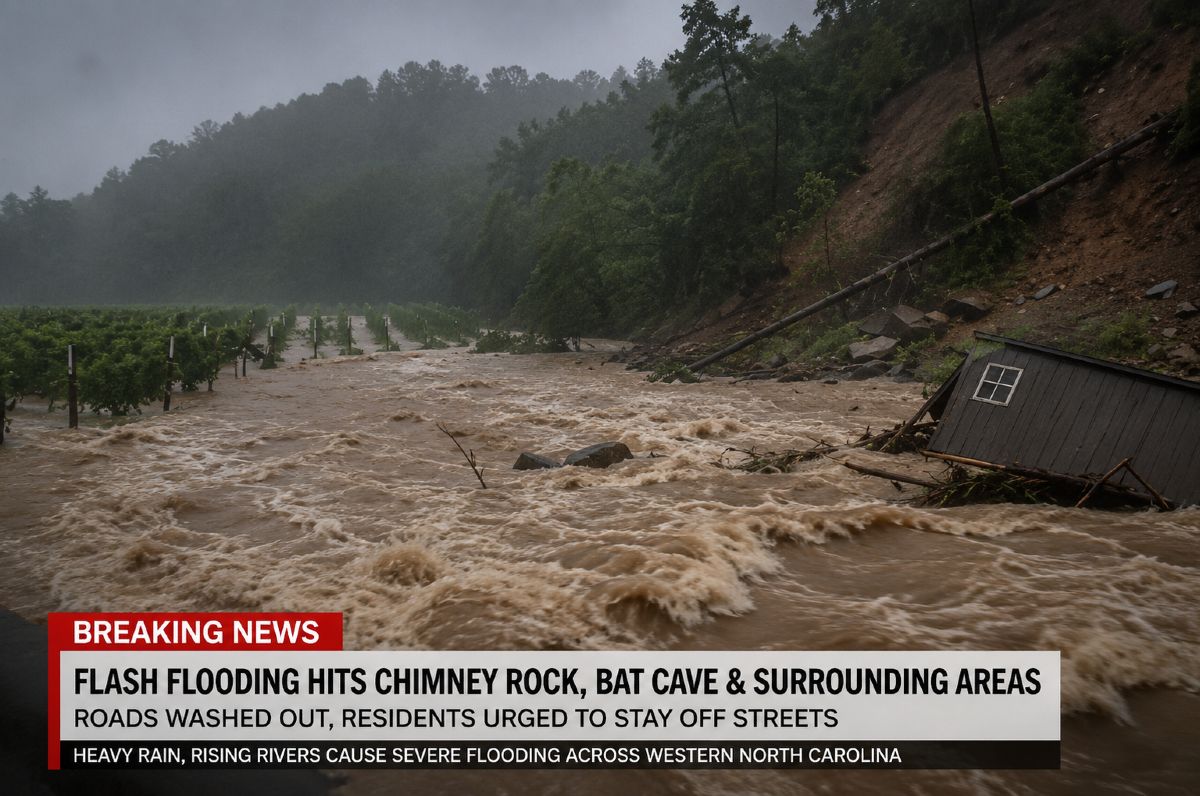
Heavy rain continues to pound Western North Carolina, and across the mountains, residents are once again watching rivers rise, roads collapse, and flood-prone communities brace for the worst.
From Hendersonville to Bat Cave, Fletcher to Chimney Rock, concern is growing by the hour as flash flooding, washed-out roads, and emergency evacuations begin unfolding across the region.
The National Weather Service has issued flash flood warnings covering much of Henderson County, including Hendersonville, Fletcher, Mills River, Gerton, Bat Cave, and areas surrounding Chimney Rock State Park. Officials warned that floodwaters are rapidly rising, roads may already be compromised, and more rainfall is expected through Wednesday.
Reports from Hendersonville indicate some residents have already needed evacuation assistance as water levels surged into neighborhoods and roads became impassable.
In Fletcher, drivers encountered flooded roadways and rapidly deteriorating travel conditions as creeks and drainage areas overflowed.
Meanwhile, locals are reporting Bearwallow Mountain Road becoming impassable in areas, adding another concern to a region still vulnerable from prior storm damage and unstable terrain.
Gerton Fire Department Warns Residents: Stay Off the Roads
The situation in Gerton and the Hickory Nut Gorge area is becoming especially dangerous.
Gerton Fire and Rescue issued warnings urging residents to stay inside and avoid unnecessary travel after multiple roads began washing out under intense rainfall. Fire officials say they’ve received numerous emergency calls related to flooding and damaged roads, while transportation crews attempt to respond to closures throughout the area.
For many longtime locals, scenes unfolding now are bringing back painful memories.
The Rocky Broad River running through Bat Cave is reportedly roaring again — an unsettling sight in an area where residents are still recovering emotionally, financially, and structurally from Hurricane Helene’s devastation less than two years ago.
Communities like Bat Cave, Chimney Rock, and Lake Lure were among the hardest-hit mountain towns during Helene, with historic flooding destroying homes, businesses, roads, and critical infrastructure. Entire sections of Chimney Rock Village were wiped away after catastrophic flooding along the Broad River.
Now, with saturated ground, weakened embankments, and temporary repairs throughout the gorge, many fear this latest round of rain could reopen wounds that never fully healed.
Growing Concerns for Chimney Rock, Lake Lure — and Asheville
Residents throughout the Hickory Nut Gorge say rivers and creeks are rising rapidly again, sparking concerns for Chimney Rock and Lake Lure if rainfall intensifies overnight.
Road systems in the gorge have historically been vulnerable to major rain events, with landslides and washouts repeatedly isolating communities in Bat Cave, Gerton, and Lake Lure during extreme storms.
In Asheville, many are now watching the Swannanoa River and French Broad River levels closely, fearing Biltmore Village could once again face severe flooding if rainfall continues at the current pace.
That anxiety isn’t paranoia — it’s experience.
Western North Carolina has endured multiple “once-in-a-generation” flooding events in recent years, and residents understand how quickly mountain weather can escalate from inconvenience to catastrophe.
What makes this storm especially concerning is that many slopes, riverbanks, retaining walls, and drainage systems remain weakened from previous storms. Areas that barely held together during Hurricane Helene may not withstand another prolonged soaking.
And in some places, they already haven’t.
Why This Storm Feels Different
Mountain flooding is uniquely dangerous.
Unlike flatter regions where water may rise gradually, Western North Carolina’s terrain funnels water rapidly downhill into narrow valleys, creeks, and rivers. Roads can disappear in minutes. Small streams become violent torrents almost instantly.
The danger also extends beyond floodwater itself.
Saturated mountainsides increase the risk of:
- Landslides
- Mudslides
- Falling trees
- Road collapse
- Sinkholes
- Washed-out bridges
- Sudden creek surges
Even roads that appear passable can fail underneath a vehicle without warning.
Emergency officials across the region continue urging residents not to drive through standing water and to avoid unnecessary travel altogether.
Storm Safety Tips for Western North Carolina Residents
As conditions continue evolving, here are important reminders for anyone in flood-prone areas:
Stay Off the Roads
If officials say stay home — stay home. Many roads in mountain communities can wash out underneath pavement before visible damage appears.
Never Drive Through Floodwater
Just a small amount of moving water can sweep away a vehicle. You also cannot see:
- missing pavement
- collapsed culverts
- debris
- sinkholes
- downed power lines beneath the surface
Prepare for Power Outages
Charge:
- phones
- backup batteries
- medical devices
- flashlights
Keep extra water and nonperishable food available.
Watch Creeks and Small Streams
In Western NC, dangerous flooding often begins in creeks long before major rivers crest.
Be Alert for Landslides
Warning signs include:
- cracking ground
- leaning trees
- shifting retaining walls
- unusual rumbling sounds
- muddy water suddenly appearing downhill
Have an Evacuation Plan
Know:
- multiple exit routes
- higher ground nearby
- where family members will go if separated
Avoid “Disaster Tourism”
Do not travel to flood areas to sightsee or take photos. Emergency crews need roads clear, and unstable ground can become deadly without warning.
A Region Still Healing
There’s a particular heaviness hanging over Western North Carolina tonight.
This isn’t just another storm for many people here.
It’s trauma returning.
The images of flooded roads, roaring rivers, collapsing banks, and emergency rescues are reopening memories many residents are still trying to process after Hurricane Helene.
Some families rebuilt.
Some businesses never fully recovered.
Some roads were only temporarily repaired.
And some communities are still carrying invisible scars.
Now the mountains wait again — watching the rain, checking river gauges, listening for emergency alerts, and hoping the ground holds.
For now, officials urge residents to remain vigilant, avoid travel, monitor emergency alerts, and take all flash flood warnings seriously.